


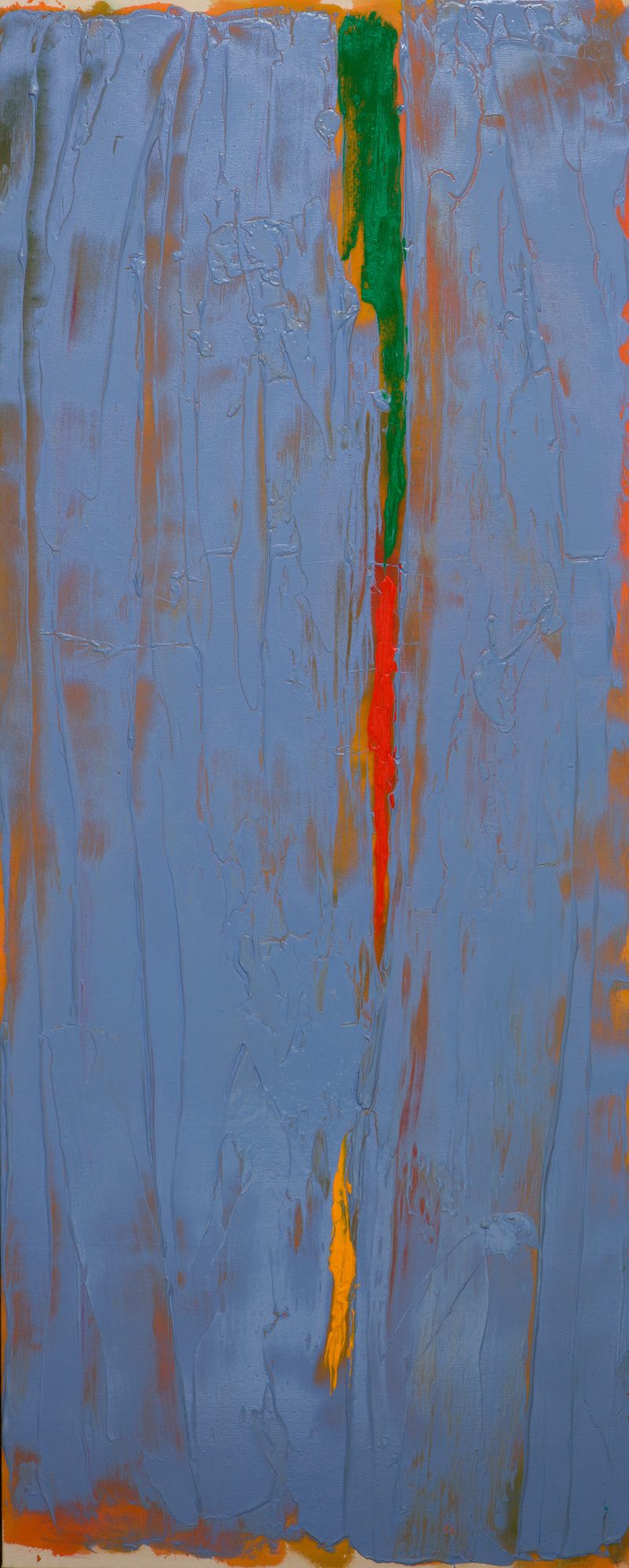

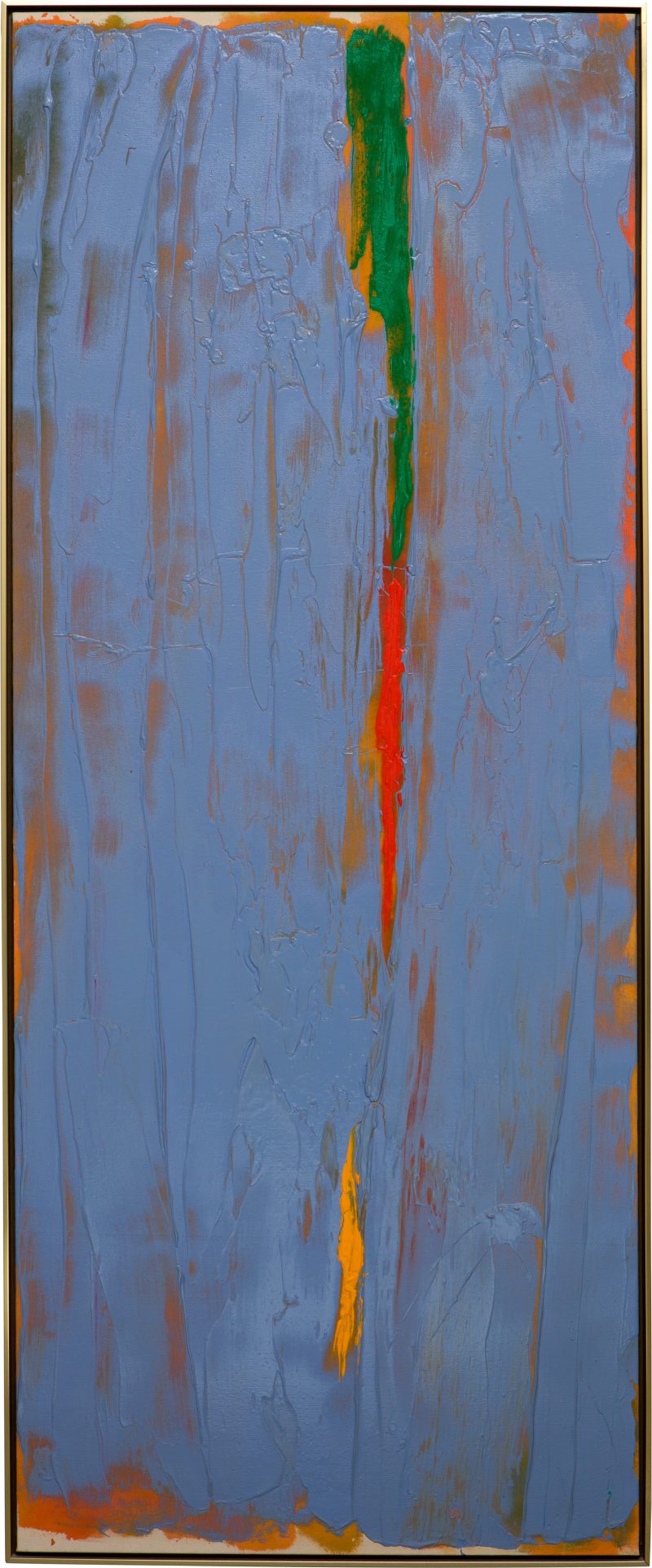
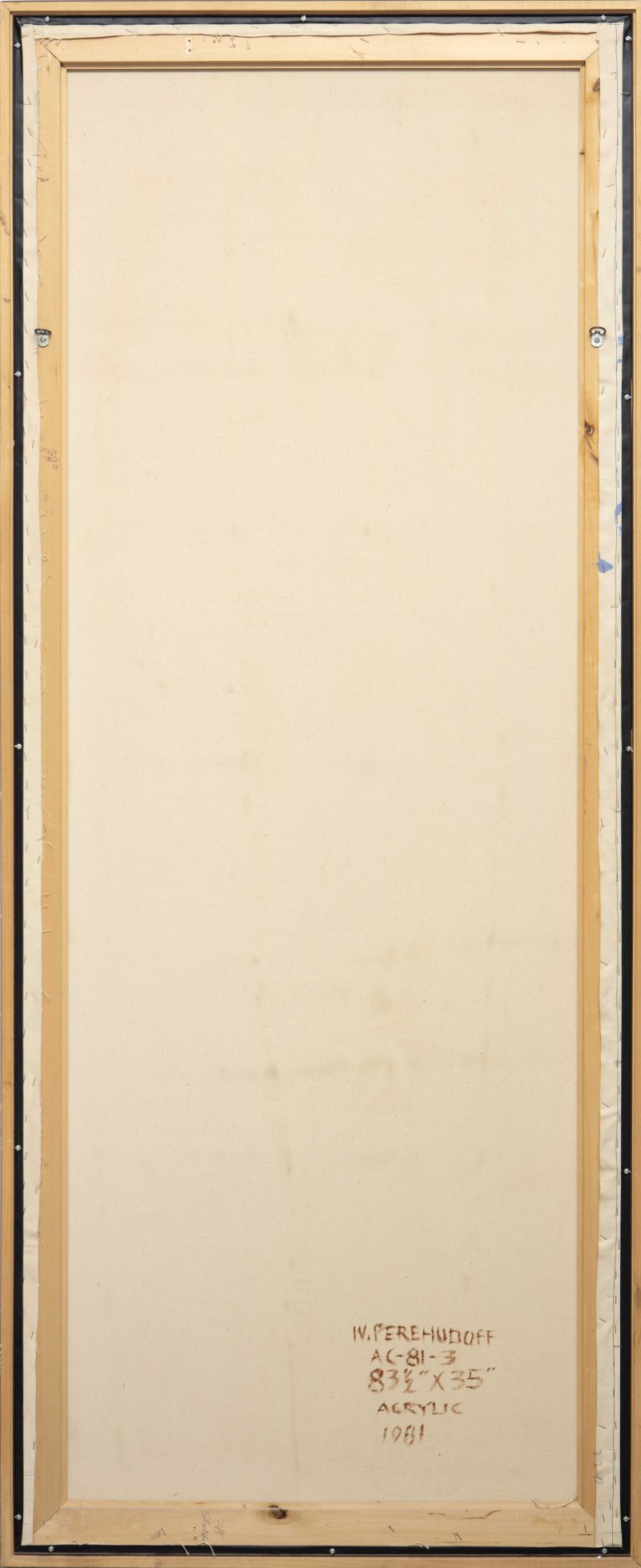


AC-81-3 is a captivating example of William Perehudoff’s richly worked paintings of the 1980s. In this highly atmospheric work, thick, vertical swaths of luminous pale-blue paint are scraped unevenly over a rust-coloured ground, resulting in a dramatic play between the opacity of the areas where the paint is densely applied and the transparency of the areas where the rich ground beneath is revealed. The radiant surface layer of paint appears to hover slightly above the subtle matte ground, creating an illusory optical space from which three rhythmic bursts of colour—yellow, red, and green—appear to emerge. Through luminous atmospheric effects and bold colour juxtapositions, Perehudoff masterfully evokes the great expanse of clear blue light unique to Canadian prairie skies and the intense, radiant reds and yellows that emerge during prairie sunsets.
Throughout his life, Perehudoff remained strongly connected to the prairies of Saskatchewan. A large part of his aesthetic language developed as a visceral response to the natural light and colours of the landscape of Western Canada. As Wilkin notes, however, Perehudoff’s work also reflected the contemporary formal concerns of post-painterly abstraction, “expressing the literalist perspective of the Colour Field movement, epitomized by the idea that the force of paintings must reside in its materials” (Wilkin, Nasgaard and Christie, The Optimism of Colour: William Perehudoff, a Retrospective, Mendel Art Gallery, 2010). From the 1960s until the end of his career, Perehudoff upheld the fundamental practices of the Colour Field aesthetic, through which he continued to convey emotion through the expressive power of colour.

