


Marcel Barbeau’s all-over compositions are among his most accomplished and avant-garde. The very first pieces appeared in the second half of the 1940s; standing out among them was the flamboyant Sauvage-furie ou Automne-délire (Savage-Fury or Autumn Delirium), dated 1947. Art historian Roald Nasgaard wrote about this work, “In this little painting, Barbeau not only held his usual emotionality in check but laid down his strokes of the spatula in a regular, repetitive, quasi-mechanical ordering. For the year 1947 such work is quite without precedent, not only for the degree to which it sacrifices all but the vestiges of automatic spontaneity but also because of its indifference to composition vis-à-vis the framing rectangle.” Here, Marcel Barbeau has created a true plastic manifesto, a precursor to the pictorial explorations that would soon push the visual arts in Quebec and Canada irreversibly toward modernity.
Indeed, this masterpiece definitively marks the genesis of the Automatistes, whose works were in many ways indebted to it. It is also a rare painting from 1947, which escaped the mass destruction of his oeuvre the following year. Enlivened by superb shimmering and transparency where the paint is scraped down to the canvas, this piece anticipates Paul Émile Borduas’s works in oil of the mid-1950s and Marcelle Ferron’s works of the late 1950s, if only for its quality of light, which shapes and sweeps the surface in a bold, mature, implacable gesture.
With Sauvage-furie ou Automne-délire, Barbeau’s palette brightens: blacks give way to radiant whites, which illuminate the entire surface. This pure contrast, enhanced with blue, red, and green pigments, enables him to push his work to the limits of all-over painting and tachism, up to then rarely explored. A tensile network of palette-knife strokes sweeps into the fray in a lateral thrust, while dabs of bright colour joyfully punctuate this embattled checkerboard. The oblique orientation of the markings lends great density to the dazzling and eminently expressive baroque surface.
Here is an essential, historic work for the audacious collector— assured and singular, like Barbeau himself.

BYDealers
Dealer's expertise delivered to auctions.
Browse Auction lots
-
Online Auction (do not delete),
Lot 0 -

Edmund Alleyn
Abstraction, 1962
Sold for $10800 CADLot 1 -

Edmund Alleyn
Chair de poule, 1964
Sold for $18000 CADLot 2 -

Marcel Christian Barbeau
Rétina 319-K, 1966
Sold for $40800 CADLot 3 -

Marcel Christian Barbeau
Sauvage-furie ou Automne-délire, 1947
Sold for $44400 CADLot 4 -

Léon Bellefleur
Mont-Saint-Michel, 1975
Sold for $16800 CADLot 5 -

Léon Bellefleur
Lueurs d’hiver, 1970
Sold for $9000 CADLot 6 -

Dominic Besner
L’aisance de la grande strassedam notoire, 2009
Sold for $24000 CADLot 7 -

Paul-Émile Borduas
Modulation aux points noirs, 1955
Sold for $444000 CADLot 8 -

Ulysse Comtois
Evening, 1991
Sold for $12000 CADLot 9 -

Ulysse Comtois
Lumière d’été IV, 1976
Sold for $7800 CADLot 10 -

Jean-Philippe Dallaire
Untitled, 1951
Sold for $9000 CADLot 12 -

Jean-Philippe Dallaire
Untitled, 1958
Sold for $19200 CADLot 13 -

Kim Dorland
Her #3, 2007
Sold for $10800 CADLot 14 -

Jacques De Tonnancour
Près du lac, 1956
Sold for $11400 CADLot 15 -

Ivan Kenneth Eyre
Nest Rest, 1970
Sold for $38400 CADLot 16 -

Marcelle Ferron
Untitled, 1959
Sold for $12000 CADLot 17 -

Marcelle Ferron
Untitled, 1963
Sold for $24000 CADLot 18 -

Marcelle Ferron
Untitled, 1988
Sold for $13200 CADLot 19 -

Marc-Aurèle Fortin
Paysage d’automne à Piedmont, 1930
Sold for $8400 CADLot 20 -

Marc Garneau
Rouge ou blanc, 2006
Sold for $10800 CADLot 22 -

Yves Gaucher
Signals—Eight Inch Progressions, 1966
Sold for $42000 CADLot 23 -

Yves Gaucher
DR + P’s, 1989
Sold for $11400 CADLot 24 -

Pierre Gauvreau
Crépusculaire, 1962
Sold for $24000 CADLot 25 -

Pierre Gauvreau
Les cerises de l’archiduchesse, 1978
Sold for $16800 CADLot 26 -

Lise Gervais
La chasse à l’orignal, 1988
Sold for $6600 CADLot 27 -

Jacques Huet
Untitled, 1987-2007
Sold for $9600 CADLot 28 -

Jacques Hurtubise
Gri-Griffeux, 1987
Sold for $16800 CADLot 29 -

Jacques HurtubiseJacques Hurtubise
Danielle, 1966
Sold for $81000 CADLot 30 -

Geoffrey JamesGeoffrey James
The East Meadow, Central Park, 1991
Sold for $7800 CADLot 31 -

Jean-Paul Jérôme
Les clochettes-quatre, 1994
Sold for $12000 CADLot 32 -

Jean-Paul Jérôme
La lumière passe de deux, 1993
Sold for $14400 CADLot 33 -

Jean-Paul Jérôme
Kaléidoscope-deux, 1999
Sold for $13200 CADLot 34 -

Denis Juneau
Jaune sur bleu, 1966
Sold for $38400 CADLot 35 -

Jean LeFebure
Untitled, 1962
Sold for $6600 CADLot 36 -

Jean Paul Lemieux
Nu sur fond bleu, 1963
Sold for $300000 CADLot 37 -

Jean Paul Lemieux
Retour au village, circa 1975
Sold for $198000 CADLot 38 -

Jean Paul Lemieux
Le jockey rouge, 1961
Sold for $46800 CADLot 39 -
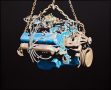
Serge Lemonde
Moteur, 2017
Sold for $6600 CADLot 40 -

Serge Lemoyne
Deux cibles, 1983
Sold for $24000 CADLot 41 -

Serge Lemoyne
Untitled (série Bleu, blanc, rouge), 1976
Sold for $55200 CADLot 42 -

Rita Letendre
Meeting in Space, 1968
Sold for $31200 CADLot 43 -

Marcella Maltais
Untitled, 1958
Sold for $9600 CADLot 44 -

Marcella Maltais
Untitled, 1958
Sold for $8400 CADLot 45 -

André Marfaing
Untitled (Juillet 69-13), 1969
Sold for $60000 CADLot 46 -

Ronald Albert Martin
Bocour Red, 1973
Sold for $72000 CADLot 47 -

Jean Albert McEwen
Midi, temps jaune, 1960
Sold for $102000 CADLot 48 -

Raymond John MeadRaymond John Mead
Whirlygig, 1987
Sold for $25200 CADLot 49 -

Mario Merola
Vibrato bleu outremer, N.D.
Sold for $14400 CADLot 50 -

Alfred Pellan
Untitled, n.d.
Lot 51 -

Robert Wakeham PilotRobert Wakeham Pilot
Marché Bonsecours, Montréal, 1961
Sold for $7200 CADLot 52 -

René RichardRené Richard
Le vieux camp nº 1, Edmonton Ouest, 1968
Sold for $22800 CADLot 53 -

Jean Paul Riopelle
Untitled, 1962
Sold for $33600 CADLot 54 -

Jean Paul Riopelle
Untitled, 1958
Sold for $270000 CADLot 55 -

Louis Jaque
Intradorsale, 1970
Sold for $2040 CADLot 56 -

Jean Paul Riopelle
Relief, 1973 (cast: 1986)
Sold for $24000 CADLot 56 -

Jean Paul Riopelle
Untitled, 1958
Sold for $33600 CADLot 57 -

Jean Paul Riopelle
Nouvelles impressions nº 60, 1977
Sold for $49200 CADLot 58 -

Marc Séguin
Jeune femme au coeur (Branding Women Series), 2011
Sold for $30000 CADLot 59 -

Francine Simonin
Les jardins, 2003
Sold for $15600 CADLot 60 -

Miyuki Tanobe
La scène hivernale de la rue de l’Hôtel-de-Ville, 2013
Lot 61 -

Miyuki Tanobe
Le concours de la décoration de Noël, 2019
Sold for $20400 CADLot 62 -

Fernand Toupin
Hors-paysage, 1971
Sold for $20400 CADLot 63 -

Claude Tousignant
Écran chromatique, 1990
Sold for $9600 CADLot 64 -

Claude Tousignant
Double 30 (Azo-cobalt), 1975
Sold for $93000 CADLot 65 -

Yves Trudeau
Untitled, 1962
Sold for $24000 CADLot 66 -

David Urban
Untitled, 1998
Sold for $7800 CADLot 67 -

Armand Vaillancourt
Untitled, 1960
Sold for $33600 CADLot 68


Footer

